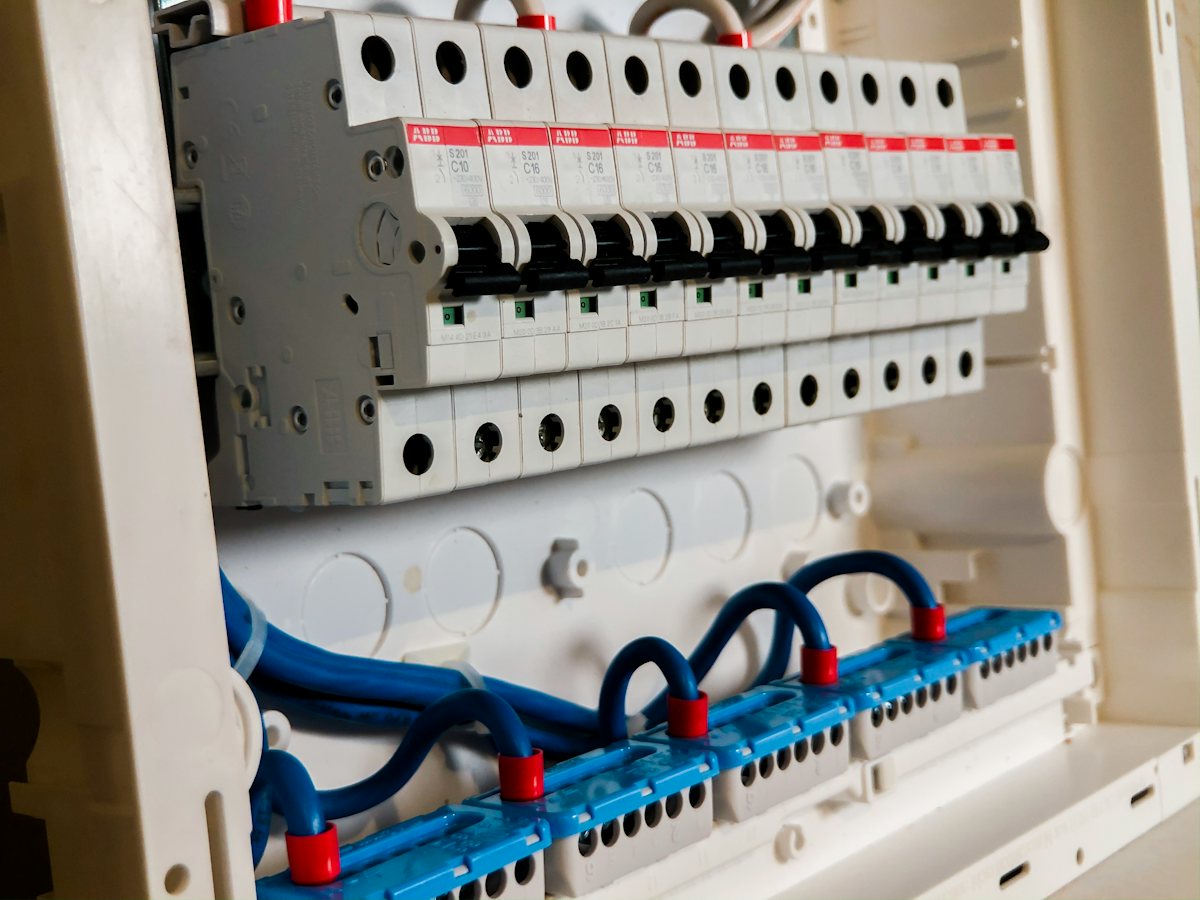
What does a panel upgrade involve?
Panel work comes in two kinds.
A panel replacement swaps the breaker box inside the house for a new one at the same capacity. It's common when a panel is full, worn, or a model with a poor safety record.
A service upgrade increases the amount of power your house can draw, usually from 100 amps to 200 amps. It involves the panel, the meter base, and the wires that bring power into the house. In Springfield, this means working with City Utilities.
A typical service upgrade goes like this:
- Load check. The electrician adds up what's in the house now and what you plan to add, to size the new service.
- Permit. The electrician pulls an electrical permit through the City of Springfield.
- Disconnect. City Utilities shuts off power at the meter on the scheduled day.
- Replace the equipment. The old panel, meter base, and service entrance wires come out, and new ones go in. Each circuit is moved to the new panel and labeled.
- Grounding and bonding. Ground rods and bonding are brought up to current code.
- Inspection. A city inspector checks the work.
- Reconnect. After the inspection passes, City Utilities restores power.
City Utilities' service standards say the customer supplies and mounts the meter socket, so the new meter base is part of the job. The standards also say any rewired service must end up with the meter outside the house in a location City Utilities approves. If your meter is indoors or in an odd spot, it may have to move. Removing or bypassing a meter during the work needs approval from City Utilities first.
When do you need a panel upgrade?
It's time to look at your panel when you see:
- A fuse box instead of breakers
- Breakers that trip often when normal appliances run together
- No open slots in the panel, or lots of tandem breakers squeezed in
- Lights that dim when the AC, dryer, or microwave starts
- Rust, scorch marks, or a warm panel cover
- A panel brand flagged by a home inspector, such as some older Federal Pacific or Zinsco panels
- A big new load on the way, like an EV charger, a heat pump, an electric range, a hot tub, or a workshop
Many homes in older Springfield neighborhoods still have 60-amp or 100-amp service. That was enough when they were built. It often isn't enough for a modern family with central air and an electric car.
Why do panels wear out or fall short?
Homes use far more power than they used to. A 1950s house in Springfield was wired for lights, a refrigerator, and maybe a window unit. Today the same house might run central air, a dishwasher, a microwave, several computers, and an EV charger.
Breakers wear. Breakers can weaken after years of trips and heat. Some older panel brands have a history of breakers that may not trip when they should.
Moisture and corrosion. Panels in basements, garages, or on outside walls can rust, especially if water gets in around the service entrance.
Storm damage. Ice and wind can pull on the service mast and the wires coming to the house. The house side of that equipment is the owner's responsibility to repair.
Past add-ons. Circuits added by previous owners, tandem breakers in slots not meant for them, and double-tapped breakers are common in panels that have been expanded over decades.
What affects the cost of a panel upgrade?
Panel work in Springfield is priced after someone looks at your setup. The main factors are:
- Panel replacement or full service upgrade. Moving to 200 amps means new service equipment, not just a new box.
- Meter location. If City Utilities requires the meter to move outside, that adds work.
- Overhead or underground service. The equipment and work differ for each.
- Number of circuits that have to be moved, labeled, and in some cases updated.
- Grounding and code updates required once the panel is replaced, such as AFCI or GFCI protection on certain circuits.
- Wall and access repairs around the panel.
- Permit and inspection fees, and the time to schedule the City Utilities reconnect.
Ask whether the estimate includes the meter base, the permit, grounding updates, and any surge protection.
Should you repair the panel or replace it?
A repair can make sense when one breaker has failed, a connection is loose, or a single circuit needs work. Those are short visits.
Replacement makes more sense when the panel is full, uses fuses, shows rust or heat damage, or is a model with a known safety history. It's also the smarter move before adding a large new load. Adding an EV charger or a hot tub to a panel that is already maxed out usually means the upgrade has to happen first anyway. If several rooms also have old wiring, ask about rewiring at the same time.
Who is allowed to do a service upgrade in Springfield?
Inside Springfield city limits, City Utilities' service standards say upgrades that increase the capacity of the main panel, meter base, or service wires must be done by a licensed and bonded electrician. The work also needs a city electrical permit and has to pass inspection before City Utilities reconnects power. After the inspection passes, the inspector usually notifies City Utilities within one to two working days, and City Utilities typically reconnects within one to two working days after that.
Frequently asked questions
How long will my power be off for a panel upgrade?
Most homes are without power for most of a day while the old equipment is replaced. If the inspection and reconnect can't happen the same day, it can take longer, so ask your electrician how they schedule it.
Do I need 200-amp service?
Not always. A load calculation shows what your home needs. Many homes with gas heat and no EV are fine at 100 to 150 amps, while homes adding electric heat, a heat pump, or an EV charger often need 200.
Can I add an EV charger without upgrading my panel?
Sometimes. If your panel has room and the load calculation works, a dedicated circuit may be enough. Load management devices can also help. See our EV charger installation page for more.
Is there a federal tax credit for a panel upgrade?
Not for new work. The federal Energy Efficient Home Improvement Credit, which covered some panel upgrades, ended for improvements placed in service after December 31, 2025, under Section 70505 of the 2025 tax law, as Instead explains. City Utilities does offer a rebate for adding a 240-volt EV outlet. See EV charger installation for the details. Ask a tax professional about your own situation.
Is a fuse box dangerous?
A fuse box that has the right fuses and isn't overloaded can work. The danger comes when fuses are replaced with larger ones to stop them blowing, which lets wires overheat. Some insurers and home inspectors flag fuse boxes, so many owners replace them before selling.
Talk to an electrician in Springfield
Call and describe the problem or the project, or send the form with a few details. Someone will follow up to set a time to look at it.