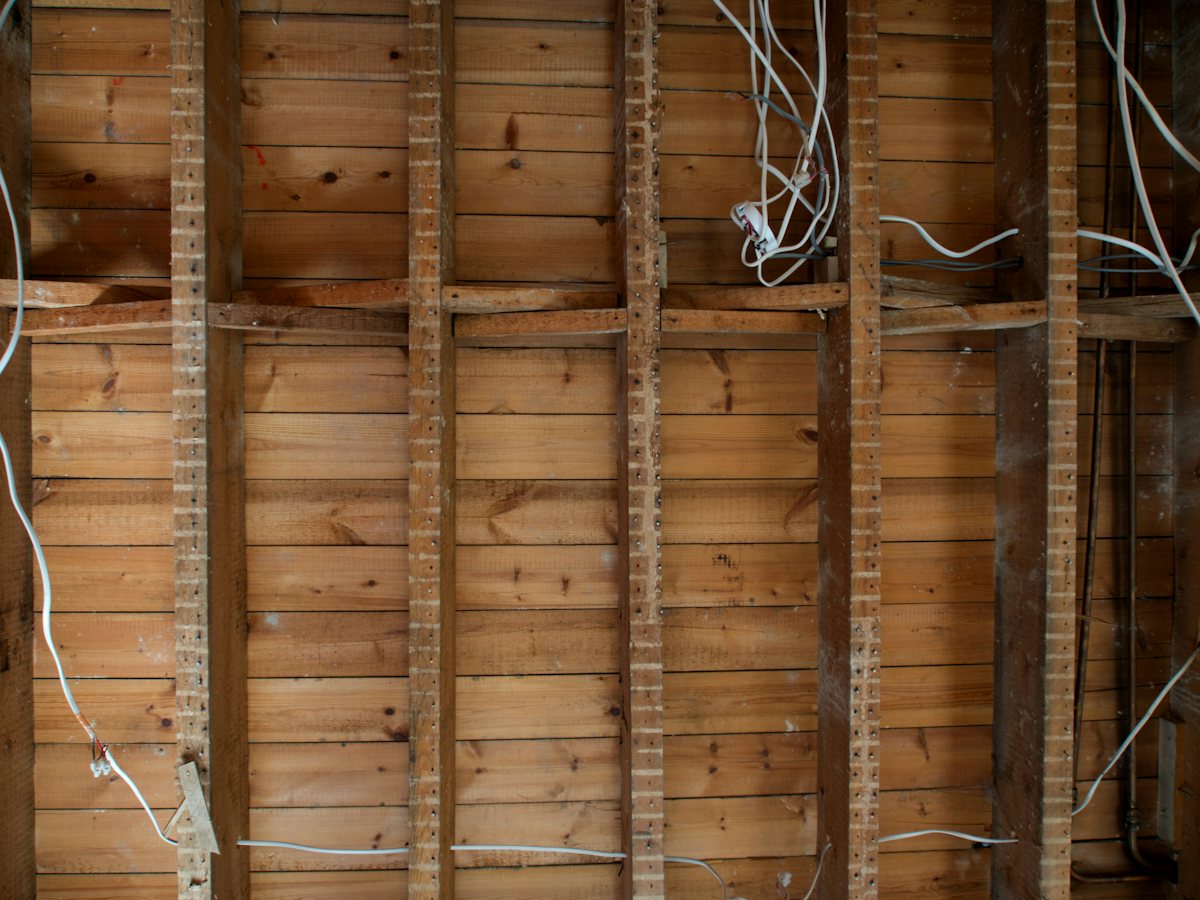
What does a home rewiring job involve?
Rewiring doesn't always mean the whole house. Many jobs in Springfield cover a few circuits, a floor, or the rooms being remodeled.
- Inspection. The electrician opens outlets, switches, and fixtures, checks the panel, and looks in the attic and basement to see what wiring is there.
- Plan. You decide together which circuits to replace now and which can wait. Rooms with the oldest wiring or the most problems usually come first.
- Permit. The City of Springfield requires an electrical permit for rewiring.
- Run new wire. New cable is fished through walls, ceilings, attics, and crawl spaces. Small access holes are cut where needed, which keeps wall damage down.
- New devices. Outlets, switches, and boxes are replaced, and grounded outlets go in where there were two-prong ones.
- Protection. New circuits get the breakers current code requires, such as AFCI and GFCI protection in the right rooms.
- Disconnect the old wiring. Old wire is disconnected so it can't be used again. It's often left in the walls, which is normal.
- Inspection. The city inspects the work before walls are patched.
Some rewiring jobs also need a panel upgrade, especially when the old panel is a fuse box or too small for the new circuits.
When does a house need rewiring?
Signs that some or all of your wiring may need replacing:
- Knob-and-tube wiring, with porcelain knobs and tubes visible in the attic or basement
- Cloth-covered wire that crumbles when it's moved
- Two-prong outlets throughout the house, or three-prong outlets with no ground behind them
- Breakers that trip or fuses that blow often
- Lights that flicker or dim across several rooms
- Outlets and switches that feel warm or show scorch marks
- An inspection report or insurer that flags the wiring
- A big remodel that opens up walls and ceilings
Homes built in the 1960s and early 1970s sometimes have aluminum branch wiring. That doesn't always need to be replaced, but the connections need the right connectors to stay safe, so it should be checked by an electrician who knows how to handle it.
Why does old wiring become a problem?
Springfield has a lot of older housing. About 40 percent of the city's homes were built before 1970, and about 13 percent before 1940, according to NeighborhoodScout's housing data. Wiring in those houses has had a long life, and a few things wear it down.
Insulation breaks down. Rubber and cloth insulation gets brittle with age and heat. Once it cracks, bare wire can touch wood, metal, or another wire.
There's no ground. Knob-and-tube and many early systems have no ground wire. Grounding gives a fault somewhere safe to go, instead of through you or your electronics.
Insulation covers it. Knob-and-tube was designed to release heat into open air. When attic insulation is blown in over it, the wire can overheat.
The house uses more power. Old circuits were sized for a few lights and outlets per room. Today's appliances and electronics often overload them.
Decades of changes. Older homes have usually had several owners and several rounds of add-on wiring. Splices with no box and mismatched wire sizes are common.
What affects the cost of rewiring?
Rewiring prices in Springfield depend on the house and how much of it is being done. The main factors are:
- How many circuits or rooms are being rewired
- Wall and ceiling type. Plaster and lath is harder to work through than drywall.
- Access from the attic, basement, or crawl space
- Number of outlets, switches, and fixtures being replaced or added
- Panel work needed to support the new circuits
- Code updates, like AFCI and GFCI protection and smoke alarm circuits
- Wall patching, which may or may not be in the electrician's estimate
- Permits and inspections
Rewiring during a remodel, when walls are already open, costs much less than rewiring finished rooms. Ask whether wall repair is included or left to a drywall or plaster contractor.
Should you repair old wiring or replace it?
A repair is fine when the problem is limited, like one damaged section, one bad splice, or a single circuit that was wired wrong. An electrician can fix that without rewiring the house.
Replacement makes more sense when the wiring itself is the problem: knob-and-tube throughout, brittle insulation, no ground, or repeated problems in different rooms. Patching one outlet at a time in a house with failing wiring costs more over time and leaves the rest of the risk in place. Many homeowners rewire in phases, starting with the kitchen, bathrooms, and bedrooms. For one-off problems, see electrical repair.
Frequently asked questions
Can I live in the house while it's being rewired?
Usually, yes. Most rewiring is done one circuit or area at a time, so power is only off where the electrician is working. Expect some noise, dust, and small holes that get patched afterward.
Does all the old wiring have to come out of the walls?
No. Old wiring is usually disconnected and left in place, because pulling it out would mean opening much more of the wall. What matters is that it's dead and can't be reconnected.
Is knob-and-tube wiring illegal?
Existing knob-and-tube wiring isn't automatically against the rules, but it can't be extended, it has no ground, and it isn't safe under insulation. Insurers and buyers often ask about it, so many owners replace it.
Can I just swap two-prong outlets for three-prong outlets?
Not without a ground. A three-prong outlet with no ground behind it looks safer than it is. An electrician can add a ground, install GFCI protection where code allows it, or rewire the circuit.
How long does it take to rewire a house?
A few circuits can be done in a day or two. A whole older house can take a week or more, depending on its size, the walls, and access. Inspections add time before walls are patched.
Talk to an electrician in Springfield
Call and describe the problem or the project, or send the form with a few details. Someone will follow up to set a time to look at it.