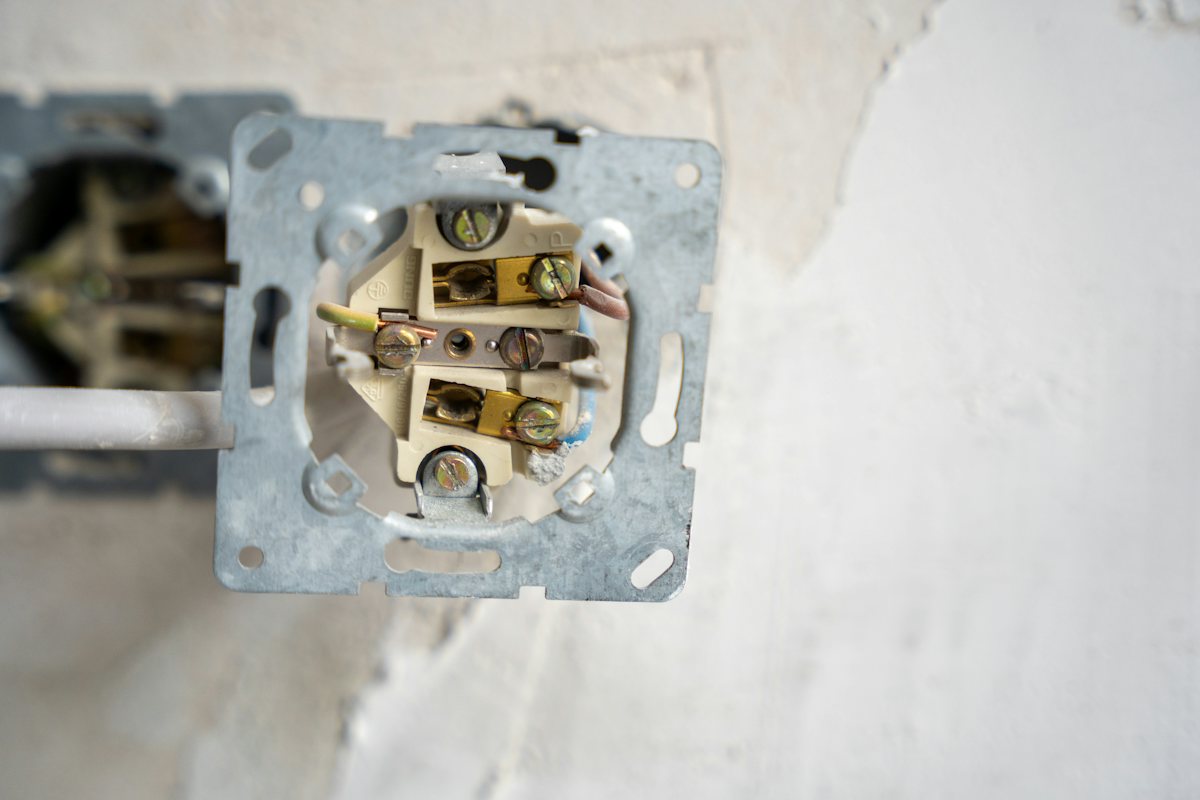
What does an electrical repair visit involve?
Most repair calls in Springfield start with tracking down the cause, because the symptom you see is rarely where the problem lives. A dead outlet in the living room might be tied to a tripped GFCI in the bathroom, or to a loose wire in a different outlet on the same circuit.
- Talk through the symptoms. When it started, which rooms are affected, and what was running when it happened.
- Find the circuit. The electrician traces which breaker feeds the problem and what else is on it.
- Test. Voltage testers and meters show where power stops, whether a circuit is overloaded, and whether grounding is in place.
- Open it up. Cover plates, fixtures, or junction boxes come off so the connections can be checked.
- Fix it. That might mean tightening a connection, replacing a worn outlet or switch, replacing a failed breaker, or repairing damaged wire.
- Test again. The circuit is checked under load to confirm the fix holds.
Common repairs include outlets that don't work, GFCI outlets that won't reset, switches that buzz or feel warm, lights that flicker, breakers that trip, and wiring damaged by a renovation, a pest, or a roof leak.
When do you need an electrical repair?
Call an electrician when you notice:
- Outlets that stop working, especially after a storm or a tripped breaker that you've already reset
- A breaker that trips over and over, even when not much is running
- Flickering or dimming lights in more than one room
- Switches or outlets that are warm, buzz, or have scorch marks
- A burning or hot plastic smell with no obvious source
- Mild shocks when you touch an appliance or a switch plate
- Loose outlets where plugs fall out or the outlet moves in the wall
Some of these can wait a day or two. A burning smell, scorch marks, or a breaker that trips immediately after you reset it can't. Turn that circuit off at the panel and leave it off until it's checked.
Why do electrical problems happen in Springfield homes?
Electrical problems usually come down to heat, age, or a connection that was never done right.
Connections loosen over time. Every time a circuit carries current, wires warm up and cool down. Over years, that movement can loosen screws on outlets and switches. A loose connection creates more heat, and the problem feeds itself.
Older wiring wears out. A large share of Springfield's houses were built before 1970. Cloth-wrapped wiring, early plastic insulation, and outlets that have been used for 50 years or more break down. Older outlets lose their grip on plugs, which causes arcing.
Circuits get overloaded. Homes built decades ago weren't planned for space heaters, window AC units, gaming computers, and kitchen appliances all running at once. When too much runs on one circuit, the breaker trips, or with old fuses, a bigger fuse sometimes gets installed, which is dangerous.
Storms cause surges and damage. Lightning and power restoration after outages can send surges through the house. Wind and ice can damage the service mast and the wires coming into your home.
Past DIY work. Splices left outside a junction box, the wrong size wire for a breaker, and outlets added off an already full circuit are common findings in houses that have had several owners.
What affects the cost of an electrical repair?
Repair prices in Springfield depend on how long it takes to find and fix the problem. The main factors are:
- How easy the problem is to find. A failed outlet is quick. An intermittent problem that only shows up some of the time takes longer to trace.
- Access. Wiring in an open basement is easier to reach than wiring behind plaster walls or in a tight attic.
- Parts. Breakers, GFCI and AFCI devices, and outlets vary in price, and some older panels need hard-to-find breakers.
- What turns up. Opening an outlet sometimes shows damaged or undersized wire that needs to be replaced.
- Permit requirements. The City of Springfield requires a permit for most electrical work, though replacing a defective breaker or fuse is one of the listed exceptions.
Many electricians charge a service call or diagnostic fee to come out and find the problem. Ask how that works, and whether it's applied to the repair, before the visit.
Should you repair the problem or replace the system?
A repair is the right answer when the problem is in one spot: one outlet, one switch, one breaker, or one loose connection. Most repair visits end there.
It's worth thinking bigger when the same kinds of problems keep showing up in different places. Repeated tripping across several circuits can mean your panel is too small for how you use the house. Brittle wiring, ungrounded outlets in many rooms, or a fuse box usually point to a panel upgrade or rewiring instead of another round of patches. If the electrician sees that pattern, you'll hear about it, and today's problem still gets fixed either way.
Frequently asked questions
Can I reset a breaker that keeps tripping?
You can reset it once after unplugging what's on that circuit. If it trips again right away, or keeps tripping over the next few days, leave it off and call an electrician. A breaker that keeps tripping is protecting you from an overload or a short.
Why does my GFCI outlet keep tripping?
GFCI outlets trip when they sense current leaking somewhere it shouldn't, often from moisture, a worn appliance cord, or an outdoor outlet without a weatherproof cover. Old GFCIs also wear out. If it trips with nothing plugged in, the outlet or the wiring needs to be checked.
Is a warm outlet dangerous?
An outlet that feels warm with nothing heavy plugged in is a warning sign of a loose connection or an overloaded circuit. Stop using it and have it checked. Outlets with scorch marks or a burning smell should be turned off at the breaker right away.
Do electrical repairs need a permit in Springfield?
Most electrical work in Springfield needs a permit. The city lists a few exceptions, including replacing bulbs, plugging appliances into existing outlets, and replacing a defective breaker or fuse. Your electrician should know which category your repair falls in.
What should I do if the power is out in only part of my house?
Check the panel for a tripped breaker and check any GFCI outlets nearby. If neither fixes it, or if lights in half the house are dim instead of off, call City Utilities and an electrician. A partial outage can mean a problem with the service coming into your home.
Talk to an electrician in Springfield
Call and describe the problem or the project, or send the form with a few details. Someone will follow up to set a time to look at it.